
• About
  • Blog
  • Forensic Disciplines
    • Foundations of Forensics
    • Arson
    • Bite Mark
    • Blood & Bodily Fluids
    • Child Abuse Allegations
    • Crime Scene Investigation
    • Death by Distribution
    • Death Investigation
    • Detection Dogs
    • Digital Evidence
    • DNA
    • Drug Analysis
    • Drug Recognition Experts
    • Eyewitness ID
    • Fingerprints
    • Firearms
    • Forensic/Sexual Assault Exams
    • Measurement Uncertainty
    • Mental Health
    • Toxicology
    • Trace Evidence
  • Resources
    • Forensic Consultations
    • Books
    • Cases
    • Featured Articles
    • Legislation
    • Motions and Briefs
      • Discovery Motions
      • Funding for Experts
      • Motions for Appropriate Relief
      • Motions to Exclude Expert Testimony
      • Motions for Independent Testing
      • Motions to Preserve Evidence
      • Motions to Suppress
      • Analyst Certification Motions
    • Reports & Publications
    • Trainings
    • Websites
    • Forensic Terminology
    • Online Research Tools
  • Crime Labs
    • General Information
    • NC State Crime Lab Procedures
    • Charlotte Mecklenburg Crime Lab
    • CCBI Lab Procedures
    • NC OCME Toxicology Lab
    • Pitt Co. Sheriff’s Forensic Services
    • Sec. of State Digital Forensic Lab
    • Wilmington Police Dept Crime Lab
    • Private and Out-of-State Labs
  • News Articles
  • Experts
    • Browse All Experts
    • Working with Experts
    • Expert Services Project
    • Add or Update Expert Records
    • Find a Private Investigator
  • Subscribe
  • Menu
  • Skip to primary navigation
  • Skip to main content
  • Skip to primary sidebar

Forensic Resources

North Carolina Office of Indigent Defense Services

Header Right

MENUMENU
  • About
  • Blog
  • Forensic Disciplines
        • Foundations of Forensics
        • Arson
        • Bite Mark
        • Blood & Bodily Fluids
        • Child Abuse Allegations
        • Crime Scene Investigation
        • Death by Distribution
        • Death Investigation
        • Detection Dogs
        • Digital Evidence
        • DNA
        • Drug Analysis
        • Drug Recognition Experts
        • Eyewitness ID
        • Fingerprints
        • Firearms
        • Forensic/Sexual Assault Exams
        • Measurement Uncertainty
        • Mental Health
        • Toxicology
        • Trace Evidence
  • Resources
        • Forensic Consultations
        • Books
        • Cases
        • Featured Articles
        • Legislation
        • Reports & Publications
        • Trainings
        • Websites
        • Forensic Terminology
        • Online Research Tools
        • Motions and Briefs
          • Discovery Motions
          • Funding for Experts
          • Motions for Appropriate Relief
          • Motions to Exclude Expert Testimony
          • Motions for Independent Testing
          • Motions to Preserve Evidence
          • Motions to Suppress
          • Analyst Certification Motions
  • Crime Labs
    • General Information
    • NC State Crime Lab Procedures
    • Charlotte Mecklenburg Crime Lab
    • CCBI Lab Procedures
    • NC OCME Toxicology Lab
    • Pitt Co. Sheriff’s Forensic Services
    • Sec. of State Digital Forensic Lab
    • Wilmington Police Dept Crime Lab
    • Private and Out-of-State Labs
  • News Articles
  • Experts
    • Browse All Experts
    • Working with Experts
    • Expert Services Project
    • Add or Update Expert Records
    • Find a Private Investigator
  • Subscribe
You are here: Home / Practice Tips / Is this all of the data?

Is this all of the data?

March 18, 2024 //  by Sarah Olson//  Leave a Comment

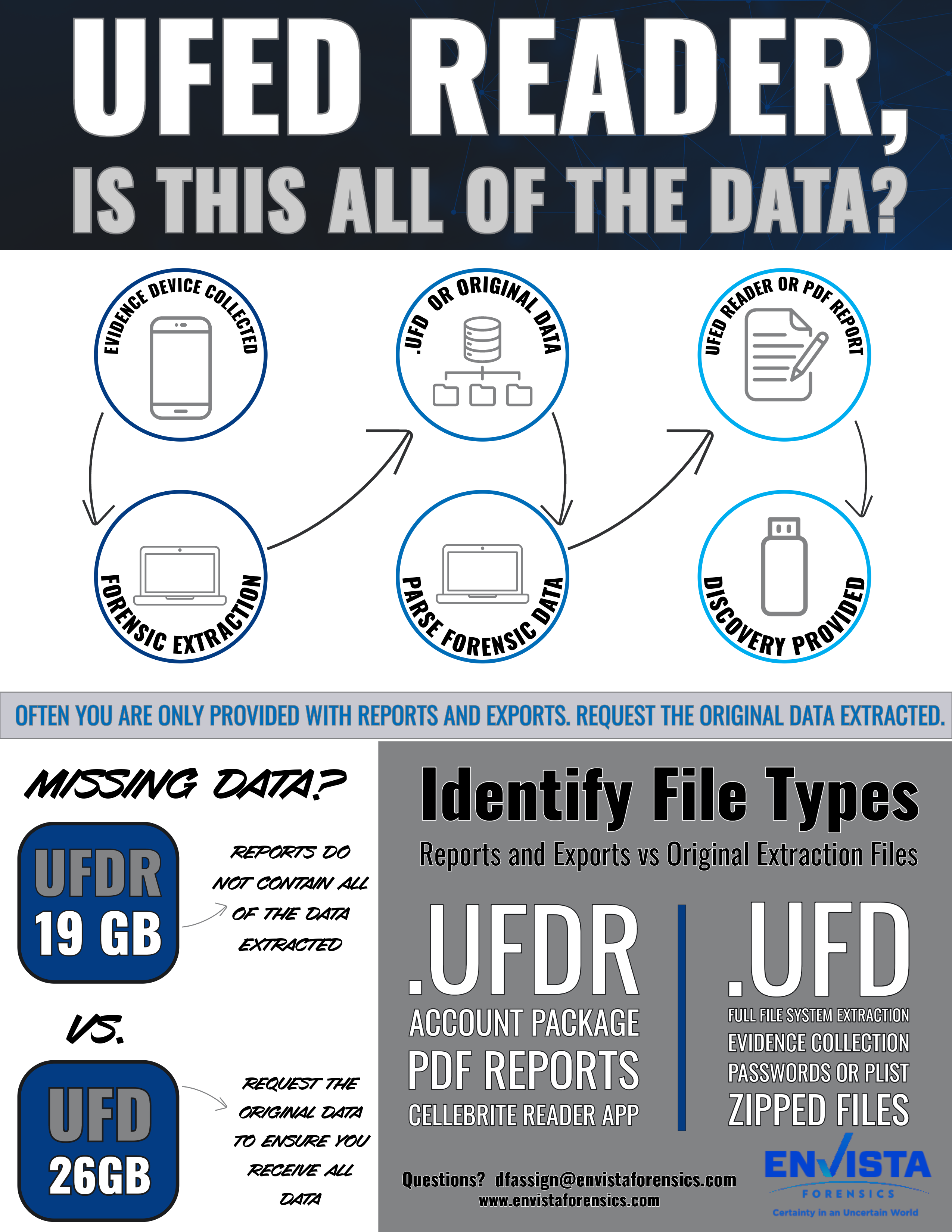
In some cases involving cell phone extractions, public defenders and other criminal defense attorneys are being provided with incomplete discovery. When the prosecution provides only PDF and UFED Reader reports to defense counsel, this is not complete discovery. While the UFED Reader reports can be helpful in navigating the phone’s data, the UFED Reader is an incomplete data set that can easily be redacted and must be validated with the original extraction.

Below is a simple infographic that you can use to determine if you are missing critical data. Thank you to Spencer McInvaille of Envista Forensics for putting together this infographic!
Category: Practice TipsForensic Discipline: Digital Evidence

Previous Post: « Seeing and Treating Neurodiverse Individuals in the Criminal Justice System
Next Post: Webinar – Tiny Constables: Automatic License Plate Readers and the Fourth Amendment »

Reader Interactions

Leave a Reply Cancel reply

Your email address will not be published. Required fields are marked *

Site Footer

The Forensic Resource Counsel provides assistance to North Carolina attorneys litigating scientific evidence issues.
Information provided on this website is for educational purposes and does not constitute legal advice.
Copyright © 2026 · Office of Indigent Defense Services · All Rights Reserved · Website by Tomatillo Design

Copyright © 2026 Forensic Resources · All Rights Reserved · Powered by Mai Theme